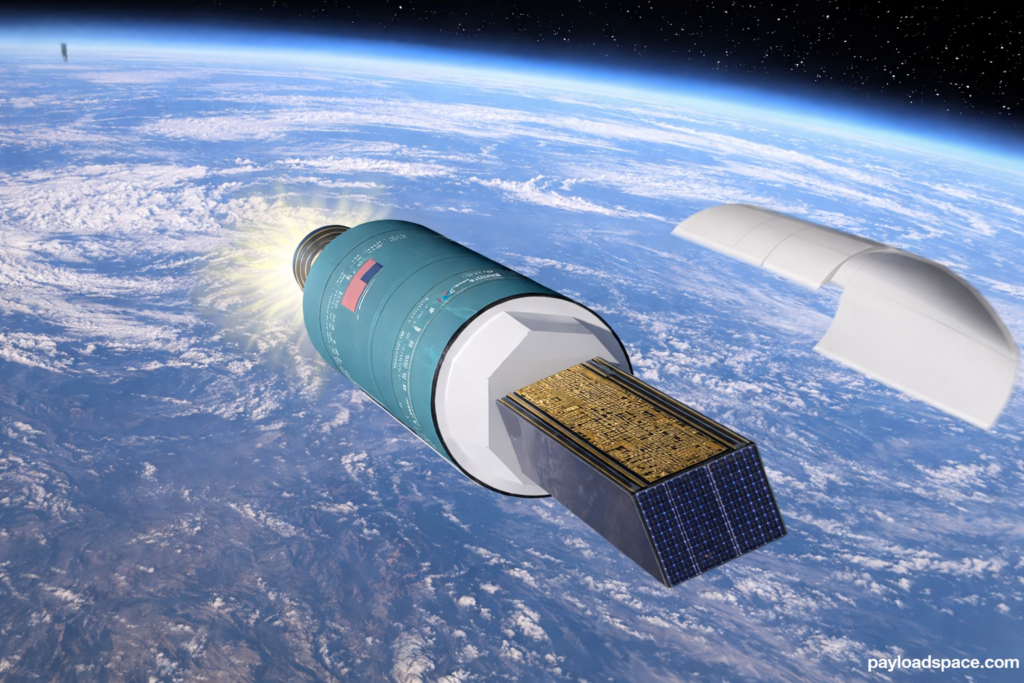
The competition to build computing infrastructure beyond Earth accelerated this week as multiple companies announced ambitious plans to deploy AI-capable data centers in orbit, positioning space as the next frontier for artificial intelligence. Jim Cantrell, who helped launch SpaceX, appeared on Bloomberg on Friday to discuss his company Phantom Space’s efforts to build orbital data centers called Phantom Cloud. Cantrell’s venture, which mass-produces rockets and spacecraft, aims to relocate cloud computing off-planet as terrestrial data centers approach their capacity limits Indian Startups Target Orbital AI Infrastructure Indian space technology company Agnikul Cosmos and cloud infrastructure firm NeevCloud signed a memorandum of understanding this week to deliver what they describe as India’s first privately led AI-powered data center in space. The partnership, announced on February 11-12, will use Agnikul’s patented technology to repurpose the upper stage of its Agnibaan rocket as an orbital hosting platform for NeevCloud’s AI SuperCloud system. The companies are targeting a proof-of-concept mission before year-end, with commercial operations expected in 2027. NeevCloud plans to deploy approximately 500 AI chips capable of processing up to 10 million AI-driven calls per day on the first satellite, with longer-term ambitions to scale to more than 600 orbital edge data centers by 2030.”We are not just building a data center in space, we are building an entirely new layer of orbital inferencing infrastructure,” said Narendra Sen, founder and CEO of NeevCloud. Technical Challenges Loom Large These announcements follow SpaceX’s January 30 filing with the Federal Communications Commission seeking authority to launch up to one million satellites as orbital data centers. The filing came days before Elon Musk announced SpaceX’s acquisition of his AI venture xAI in a deal valued at $1.25 trillion. However, industry experts question the feasibility of such ambitious plans. Voyager Technologies CEO Dylan Taylor told CNBC that the cooling problem poses a fundamental physics constraint. “It’s counter intuitive, but it’s hard to actually cool things in space because there’s no medium to transmit hot to cold,” Taylor said, noting that all heat dissipation must occur through radiation.MIT professor Olivier de Weck told Forbes that electronics must be radiation-hardened or heavily shielded to operate reliably in orbit. TechCrunch estimates a 1 gigawatt orbital data center would cost approximately $42.4 billion, nearly three times its terrestrial equivalent. Meanwhile, British company Space Forge has made progress on in-space semiconductor manufacturing. The company successfully generated plasma aboard its ForgeStar-1 satellite in December 2025, establishing it as the first free-flying commercial semiconductor manufacturing tool operated in space. explain simple words